
About MEAL Bridge
Built to close the gap between MEAL theory and practice.
We exist to help organizations build MEAL capability that improves decisions, accountability, programme quality, and long-term institutional performance.
3
connected divisions
12+
years leadership experience
MENA
regional focus
Why we exist
Strong organizations need more than compliant tools.
MEAL Bridge was founded on a simple observation: technical knowledge is widely available, yet many organizations still struggle to translate it into connected systems, confident teams, and decisions that improve programmes.
Our role is to bridge those gaps—between evidence and action, standards and local realities, technology and people, learning and leadership. The result should not be dependency on an external consultant. It should be stronger organizational capability.
Organizations across MENA equipped to create sustainable, measurable, and people-centred impact.
What guides the work
Principles visible in the final system—not only the proposal.
These principles shape how we diagnose problems, make technical choices, work with partners, and judge whether an engagement has created lasting value.
Evidence first
Recommendations must be grounded in credible information, disciplined analysis, and an explicit decision need.
People-centred
MEAL systems should strengthen accountability, improve services, and respect the people whose lives generate the data.
Practical by design
A technically perfect framework has little value if teams cannot operate it under real constraints.
Learning oriented
Every engagement should leave stronger capability, clearer judgment, and a better next cycle.
Integrity always
Confidentiality, transparency, ethical judgment, and responsible evidence use are non-negotiable.
Locally grounded
International practice must be adapted to context—not imposed without understanding institutions and communities.
Our working approach
Build capacity, not dependency.
Success is not measured only by what we deliver. It is measured by what the organization can understand, operate, adapt, and improve after the engagement.
Understand before prescribing
We begin with the organization’s context, decisions, people, existing systems, incentives, risks, and operating constraints.
Design the whole operating model
We connect methodology, roles, workflows, technology, governance, and capability rather than treating them as separate deliverables.
Build with the people who will use it
Participation and iterative testing make solutions more usable, more owned, and more likely to survive implementation.
Transfer capability throughout
Coaching, mentoring, documentation, and guided practice are embedded from the start—not postponed to a final handover.
Leadership
Distributed leadership. Shared strategic direction. Clear accountability.
MEAL Bridge is led through a hybrid leadership model that combines decentralized divisional leadership with coordinated company-wide governance. Each Managing Partner leads their respective division with defined responsibility for its direction, development, quality, and performance, enabling decisions to remain close to the technical and operational work.
At the company level, the leadership team works collaboratively on MEAL Bridge’s vision, mission, strategic priorities, cross-divisional opportunities, and major organizational decisions. This shared approach ensures that the Academy, Systems Development, and Consultancy divisions develop as distinct areas of expertise while operating toward one coherent institutional direction.
The Founder & CEO holds overall executive responsibility for the company, providing organizational leadership, ensuring alignment across divisions, and overseeing the integration of strategy, partnerships, institutional development, and company-wide performance. Managing Partners retain clear leadership and accountability within their respective divisions while contributing to the broader strategic direction of MEAL Bridge.
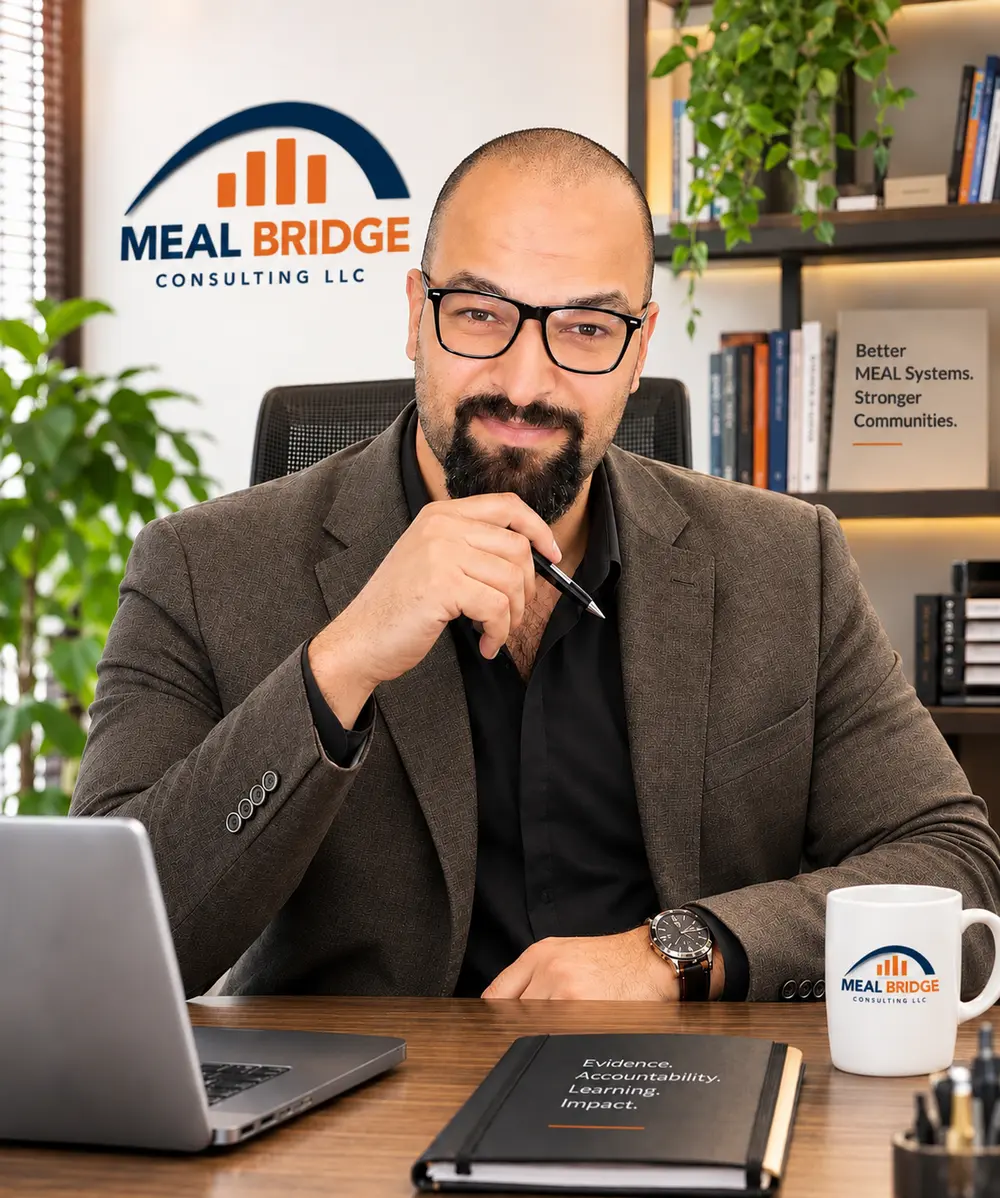
Founder & CEO
Humam Alherk
Provides overall executive and strategic leadership for MEAL Bridge, with responsibility for organizational direction, institutional development, strategic partnerships, cross-divisional alignment, and company-wide performance. He also provides technical leadership within the company’s Consultancy work.
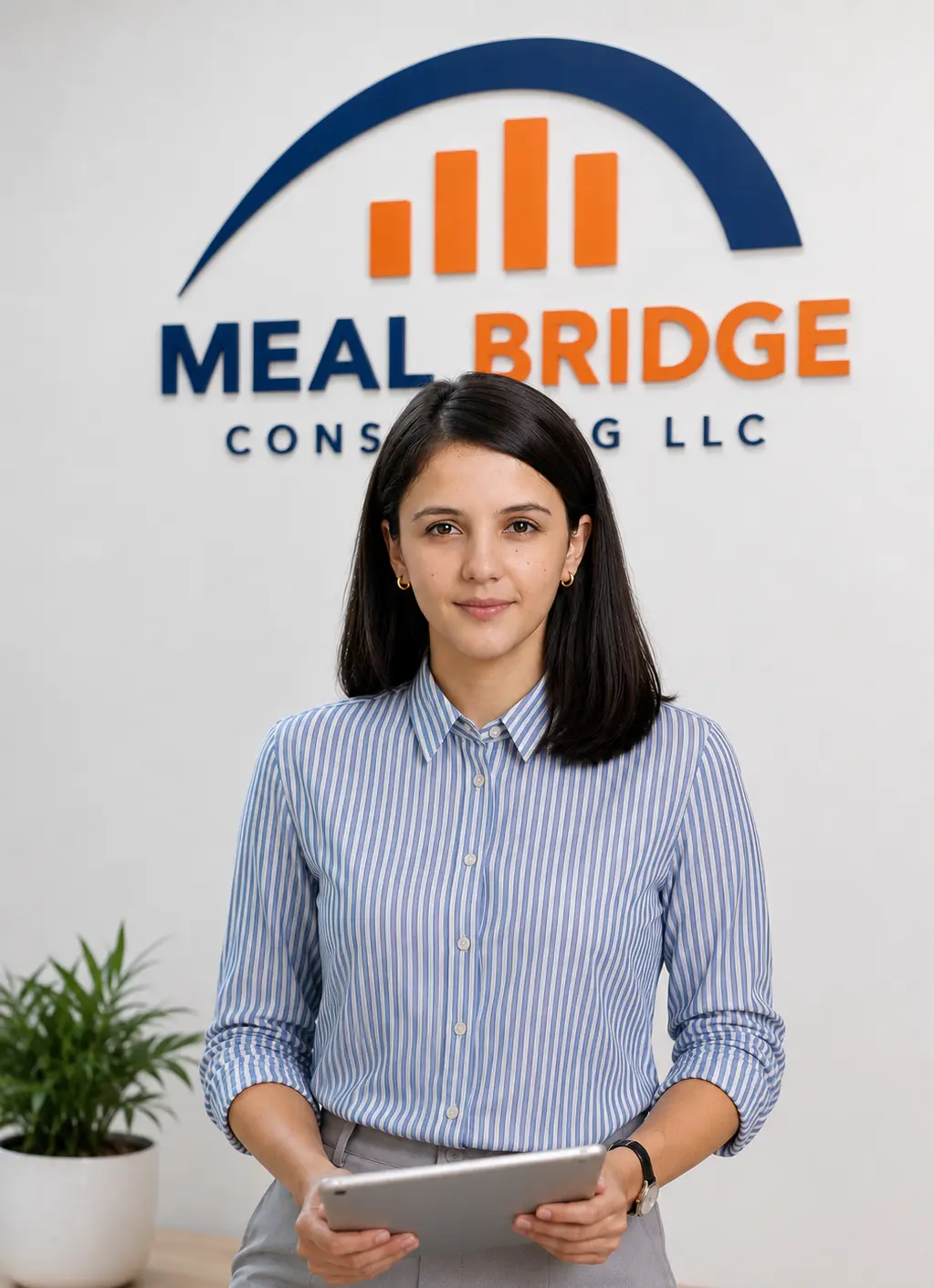
Managing Partner – Academy
Hadeel Wardeh
Leads the strategic and operational development of the MEAL Bridge Academy, including learning pathways, professional development, participant experience, and the connection between structured learning and applied professional practice.
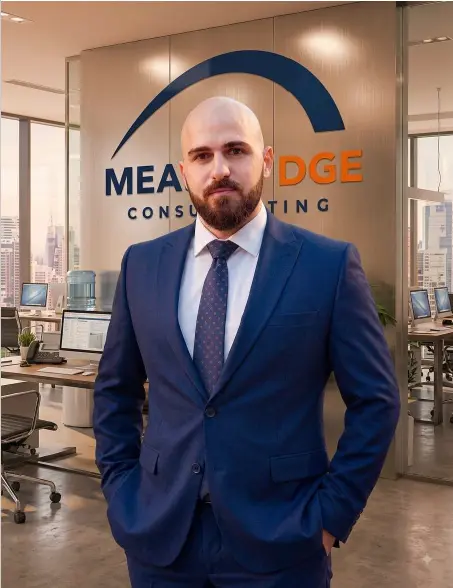
Managing Partner – Systems Development
Muhamed Kheer Abo Khalaf
Leads the Systems Development division, with responsibility for digital solutions, connected data workflows, automation, information systems, and practical technologies that strengthen organizational decision-making.
Experience Behind MEAL Bridge
Professional practice brought into a shared institutional platform.
MEAL Bridge is built on professional experience brought into the company by its leadership. Within that foundation, Humam Alherk brings more than twelve years of progressive MEAL/MERL experience across humanitarian and development contexts. This experience predates MEAL Bridge and helps inform the company’s technical standards, operating approach, and emphasis on practical implementation.
His experience spans organizational MEAL leadership, emergency response, accountability, evaluations, programme information, digital workflows, capacity development, and the practical work of helping teams turn evidence into decisions. Across MEAL Bridge, this technical foundation is complemented by dedicated leadership in professional learning and Systems Development, bringing distinct areas of responsibility into one institutional platform.
“The strongest MEAL system is not the most complicated one. It is the one people trust, understand, use, and continuously improve.”
IntegrityImpactInnovationLocal capability
Collaboration
Extend capability through the right partnerships.
MEAL Bridge works with NGOs, universities, public institutions, independent specialists, technology partners, and professional networks where complementary strengths can create greater value.
Technical assignments
Academic collaboration
Research & learning
Digital innovation
Professional networks
Regional initiatives
Explore a partnership
A stronger next cycle
Talk with MEAL Bridge
Leave the organization more capable than we found it.
That is the standard behind every consultancy, system, learning programme, and partnership.